Saturday, June 8, 2013

Earn Money using Your Website or Blogstite or Facebook or Twitter or Tumblr

Earn Money using Your Website or Blogstite or Facebook or Twitter or Tumblr

AdFoc.us URL Shortener

How does the AdFoc.us service work?

AdFoc.us is a revolutionary new way of making money from sending people to links. If you have a popular FaceBook or Twitter profile and you discover an interesting article, simply drop the link in the AdFoc.us URL shortener and send the AdFoc.us shortened URL to your friends. Once people start clicking on your short URL, you start making money!

How much will I be paid for my shortened URLs?

All of the clicks you receive on your shortened URLs are paid out according to the country each visiting user comes from. United States generally pays out the most because it is the highest quality for advertisers

What is the minimum payment threshold for payment?

We pay our users as long as they have earned more than $10.00 since their last payment. If it is your first payment, you must earn $10.00 first before a payout is sent. We set these minimums because of the fees associated with sending payment.

When are payments sent?

Currently, we payout users on a month-to-month basis. We calculate earnings from the previous month (short URL earnings + referral commissions) and update your "Account Balance" (on the "Payment History" tab). On the 7th of the month, you can click the "Payment History" tab while logged in to check the status of your payment or request a payment. You must request a payment in order to be paid. It can take up to 72 hours from the time you request payment to see the money in your PayPal or Payza account.
U can Also Income via Your Web Site

Referral Program

The AdFoc.us referral program is a great way of making extra money from simply referring other users to join our service. Referring new users to AdFoc.us will give you 20% of the referred user's earnings for life.

R U Ready? Lets start Today 

Step 01:
Click  this Link  Click Here and Sign UP
Step-02:
Login  Your Account . Now u Share Your Shrink Your Link .If u want to single link [select single link] or if u want to multiple link please select multiple link 
Adfoc.ustype: http://www.technologybd.net or what link u wanted to shrink .
after complete shrink share your link & monitor if any visitor click your link this visitor appear a add page after 6 second click skip button then your page will be displayd.

I am working still now.If any question or any suggestion please comments or if it is helpful for you please share it your Friends circle.

Monday, June 3, 2013

Configure File Transfer Protocol FTP SERVER on Windows Server 2003

Step-1: start-control panel-Add or Remove Program-Add Or Remove Components-select Application Server-Details-select.
Internet Information Service(IIS)-Details-select Ftp Server-ok-ok-next-finish
Step-2:start-administrative tools-IIS Manager-FTP Sites-Default Ftp Sites(Right Click)-propertis-FTP Sites:[192.168.0.254]
Home Directory-Local Path:[C:\Inetpub\ftproot] [*] Read [*] Write [*] Log Visits -Server(Right Click)-Security Accouts-[*] Allow Anonymus Connections-ok. Server(Right Click)-All Tasks-Restart.

Configure SMTP POP3 EMAIL SERVER on Windows Server 2003

Step-1:
start-administrative tools-configure your server wizard-next-next-next-select mail server-next-Authentication
Method:[Active Directory Integreted]-Email Address:[technologybd.net]-next-next-finish.
Step-2:
start-administrative tools-Internet Information Service-Default SMTP virtual server(Right Click)-propertis-
General-Ip Address:[192.168.0.254]-apply-ok.

Configure Web or IIS Server on Windows Server 2003

Step-1:start-administrative tools-configure your server wizard-next-next-select Application Server-next-next-next-finish.
Step-2:start-administrative tools-Internet Information Service-server-Default Website(Right Click)-propertis-IP address:[192.168.0.254]-Home Directory:[c:\Inetpub\wwwroot\site]-Documents-select Enable default content page-Index.html

create android virtual device avd

An Android Virtual Device (AVD) is an emulator configuration that lets you model an actual device by defining hardware and software options to be emulated by the Android Emulator.
1.Click on the mobile icon from the top of IDE.
2. Click on New.

3.Give a AVD name .

Thursday, May 30, 2013

configure default routing in Cisco Packet tracer 5.3.3


configure default routing in Cisco Packet tracer 5.3.3

Default Routing
A default route identifies the gateway IP address to which the ASA sends all IP packets for which it does not have a learned or static route. A default static route is simply a static route with 0.0.0.0/0 as the destination IP address. Routes that identify a specific destination take precedence over the default route.
Router-01-Configuration
Read More

Configure RIP Routing on Cisco using packet tracer 5.3.3

Configure RIP Routing on Cisco using packet tracer 5.3.3

The Routing Information Protocol (RIP) is a distance-vector routing protocol, which employs the hop count as a routing metric. RIP prevents routing loops by implementing a limit on the number of hops allowed in a path from the source to a destination. The maximum number of hops allowed for RIP is 15. This hop limit, however, also limits the size of networks that RIP can support. A hop count of 16 is considered an infinite distance and used to deprecate inaccessible, inoperable, or otherwise undesirable routes in the selection process.
Download Packet File Now

configure EIGRP In Cisco Packet tracer 5.3.3

configure EIGRP In Cisco Packet tracer 5.3.3

Enhanced Interior Gateway Routing Protocol - (EIGRP) is an open routing protocol loosely based on their original IGRP created by Cisco. EIGRP is an advanced distance-vector routing protocol, with optimizations to minimize both the routing instability incurred after topology changes, as well as the use of bandwidth and processing power in the router. Routers that support EIGRP will automatically redistribute route information to IGRP neighbors by converting the 32 bit EIGRP metric to the 24 bit IGRP metric. Most of the routing optimizations are based on the Diffusing Update Algorithm (DUAL) work from SRI, which guarantees loop-free operation and provides a mechanism for fast convergence.

Download Packet File Now: dynamic-routing-with-EIGRPv4

Configure OSPF Routing on Cisco using packet tracer 5.3.3

Configure OSPF Routing in Cisco using packet tracer 5.3.3

Open Shortest Path First

 (OSPF) is a link-state routing protocol for Internet Protocol (IP) networks. It uses a link state routingalgorithm and falls into the group of interior routing protocols, operating within a single autonomous system  (AS).
OSPF is perhaps the most widely used interior gateway protocol (IGP) in large enterprise networks. IS-IS, another link-state dynamic routing protocol, is more common in large service provider networks. The most widely used exterior gateway protocol is the Border Gateway Protocol (BGP), the principal routing protocol between autonomous systems on the Internet.
OSPF Routing
Download Packet File:

configure DNS Server in Windows server 2003

configure DNS Server in Windows server 2003

                                         Active Directory Installation    
DNS means Domain Name System.Every network has a dns server .so now i will disscuss how to configure DNS Server in Windows  server 2003 
Start-run-dcpromo-next-next-next-select domain controller for a new domain-next-select domain in a new forest-next-
Technologyitbd.net-next-Technologyitbd-next-next-next-select install and configure the DNS server-next-select permission
compatible only Windows 2000 or Windows 2003-next-next-next-finish-restart now.   
*At first check Ip
IP address        : 192.168.0.254
Subnet mask    : 255.255.255.0
Pre. Dns Server: 192.168.0.254

Configure dhcp in windows server 2003 step by step

Configure dhcp in windows server 2003 step by step          

Dynamic host configuration protocol. Dhcp server used for Dynamically assign IP Address.Now i will discuss how to Configure dhcp in windows server 2003 step by step. 
Step:01
Click-Start-program-administrative tools-configure your server wizard-next-next-DHCP Server-next-next-next-next-Name:DHCP -Description:It is obtain ip address Automatically -
Start IP Address :192.168.0.1
End IP Address :192.168.0.253
Subnet Mask :192.168.0.254
-next-next-next-select Yes,I want to configure this option now-next-next-IP Address:192.168.0.254-

configure key based ssh authentication in rhel 6.4 or centos 6.4 or Scientific linux 6.4 or Fedora 18

configure key based ssh authentication in rhel 6.4 or centos 6.4 or Scientific linux 6.4 or Fedora 18

Whenever you take ssh in a remote computer it prompts you for your password, which might be insecure in some cases. Configuring key based authentication for ssh server will solve this problem and provides one extra layer of security. Key based ssh is also used in cases where we configure some applications (For example: backup servers) to be able to take remote shell without giving a password but using keys.
I will use following configuration :
ssh server

create a simple WordPress theme

create a basic WordPress theme

To start building your theme, first create a sub-folder in the wp-content/themes directory in your WordPress folder. For the purpose of this tutorial, we will call the folder "tutorial_theme". The name of the folder should correspond to the name of the theme you want to create. To do this you can use either your favorite FTP client or the File Manager tool in your cPanel.
Before you start creating the theme, you should decide how the layout of your website will look like. In this tutorial we will build a WordPress theme that consist of a header, sidebar, content area and a footer ,as shown below:

removing bullets from sidebar and Categorie wordpress theme

Bullet is very important for a every website.But some time it is crazy for sidbar & categore .Now i will Disscuss how to remov bullets from  sidebar and Categorie wordpress theme. 
Remove bullet form Sidebar
Example:
#sidebar {
    width: 220px;  
    border: 2px #a2a2a2 solid;
    float: right;
    background-color:red;
    list-style:none;
  
}

add widget footer in wordpress theme

add widget footer in wordpress theme

Quesiton:
I wanted to use widgets in the footer of my WordPress theme but my wordpress theme didn’t come with a footer-sidebar by default. I didn’t really wanted to change the theme just because of that. So I hacked the wordpress theme to introduce footer-sidebars. If you are looking for a tutorial that explains how you can add sidebars/widgets to the footer of your WordPress theme then keep reading.
wordpress_theme_icon_128
There are really three main parts to introducing a footer sidebar/widget area in your theme:
  1. Registering the Sidebar(s) in the WordPress Theme
  2. Inserting the Sidebars In the WordPress Theme
  3. Putting some style into the sidebars

এসইও(SEO) কি or What is Search Engine Optimization (SEO)

এসইও(SEO) কি or What is Search Engine Optimization (SEO)

এসইও(SEO) বা সার্চ ইঞ্জিন অপটিমাইজেশন বলতে বুঝায় বিভিন্ন সার্চ ইঞ্জিনে একটি সাইটকে তুলে ধরা সাইটে কি আছে তা সার্চ ইঞ্জিনকে বুঝানো। আমরা যেকোনো কিছু লিখে গুগলে সার্চ দিলে দেখা যাবে অনেক পরিমানে ফলাফল পাওয়া যায় এর মধ্যে প্রথম ২/৩ পেজে যে সাইট গুলো আমরা পাই সেগুলোই আমরা দেখে থাকি। এটাই হল এসইও মানে সাইটে এসইও করলে সার্চ ইঞ্জিন আপনার সাইটকে আগে নিয়ে আসবে আগে থেকলে ভিজিটররা বেশি দেখবে। এটাই মূলত এসইও র কাজ।

ভুল ধারনাঃ

অনেকে এসইও বলতে গুগল অ্যাডওয়ার্ড (Google Adwords ) কে বুঝে। আসলে এটা কোন এসইও র মধ্যে পরে না। গুগল অ্যাডওয়ার্ড (Google Adwords ) বলতে গুগলকে টাকা দিয়ে অ্যাড এর জায়গা কেনা। মানে আপনি যদি গুগল অ্যাডওয়ার্ড (Google Adwords )  নেন তবে আপনার বাছাইকৃত কীওয়ার্ড দিয়ে যদি সার্চ দেওয়া হয় তবে আপনার সাইটের লিঙ্ক প্রথমে দেখাবে। নিচের ছবির মত।

oDesk Unix Test Questions and Answers

our todays topic is about odesk tests answers - answer of odesk Unix Test Questions and Answers . i think it will helpful to you and you can pass odesk Unix Test Questions and Answers  test . lets start your exam

Question 1: The UNIX command
a.out &
runs the program a.out:

a. With highest priority
b. With highest speed
c. Only when no other process is running on the system
d. In the background
e. Is invalid

Saturday, April 6, 2013

How to mumble server on Rhel 5 or Centos 5


It is currently very difficult to build Mumble and Murmur on RHEL 5 and its derivatives, such as CentOS 5. For these systems, it is recommended to use the current static binary, linked from the Mumble home page.
Unfortunately, if you use the static binary, you will have to manually start the server each boot or write your own initialization scripts (see #Manual Installation, below). For this reason, there is now a third-party package available, which configures murmur as if it were provided by the operating system.

Package Installation

There is an unofficial, unsupported, third-party package of (the statically linked) Murmur available for installation via yum. It has only been tested o CentOS 5.6 (i386) at this time, but should work on other RHEL 5.x versions and derivatives. If you have any problems or feedback (such as results on other distros besides Centos 5.6 i386), please find lewellyn on IRC. The package is not officially supported by anyone, but the package definition and configuration scripts derive from the Fedora 15-Alpha and Mandriva packages and the binary is the official static tarball from mumble.sf.net, the various pieces of which are known to work reliably.
(As of April 2011, the third-party GBS repository is providing Murmur 1.2.3.)
The steps are as follows:
  1. As root (such as via sudo), run: rpm -ivh http://pkg.geekbakery.net/RedHat/5/stable/noarch/gbs-release-1.0-1.gbs.noarch.rpm
    1. Optional: Configure your new repository, for example using the priorities plugin.
  2. Install murmur from the new GBS repository you just added: (run the commands as root or via sudo)
    1. If you want to just install murmur and don't care about ensuring you have the proper dependencies for the web functions or dbus: yum install murmur
    2. Instead, if you want to make sure you have all the proper dependencies for running with dbus and the included web scripts (this package depends on murmur): yum install murmur-suggests
    3. NOTE: The first time you install a package from the GBS repository, you may/should get a prompt to accept the key. The proper ID for this key is 98b3c52e. If this matches what is on your screen, enter 'y' at the confirmation prompt.
That's it! Now you can service murmur start to start your new server. Or, if you wish, you can customize your configuration first.
Note that installing from the GBS repository indicates acceptance of the repository's agreement. Summary of the agreement is: No support nor warranty is offered, and if it breaks, you get to do what you will with the pieces.


Manual Installation

Here's the process for manually installing on CentOS 5.4, using the init script and config from a mandriva rpm and the 1.2.2 static binary release: (You can use this as the starting point for your own manual installation of the latest version.)
yum install lzma

Details Here:Read More

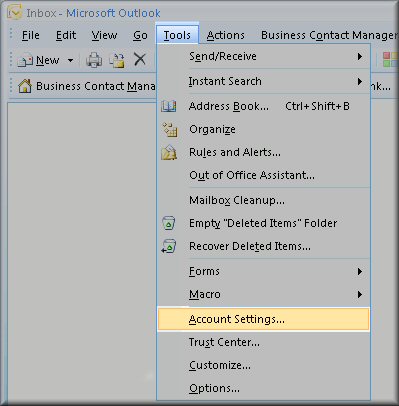
Setting up GMail on Outlook 2007/2010


As we complete transferring clients to our new servers, the last stage is always the setting up of email; this post shows how to set up email for Google Apps.

Note that menu options are show as a chain; so Tools->Options->Advanced would mean find the menu option Tools, then the menu or tab option Options, then the menu or tab option Advanced.
1. Go to the menu open Tools->Account Settings
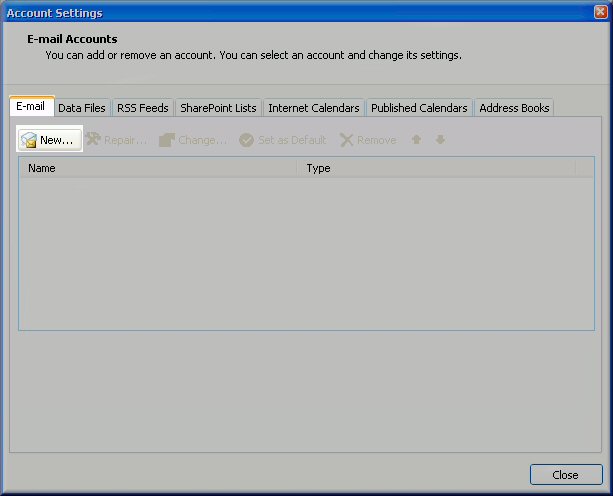
2. Click on the EMail tab, and select New. If you are modifying an existing email account, select it from the list, and then go to step 6 in these instructions.
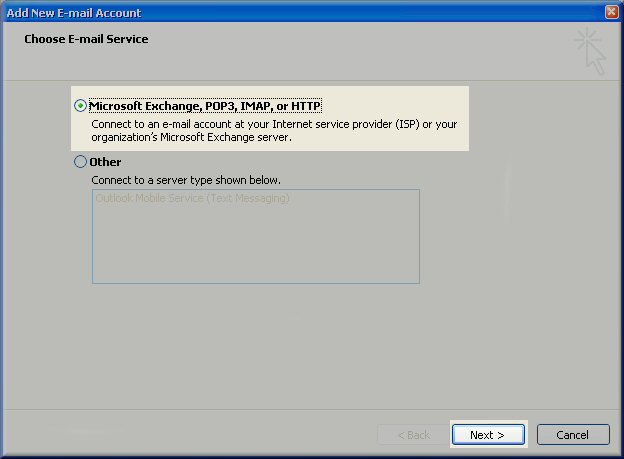
3. Select Microsoft Exchange, POP3, IMAP or HTTP and click Next
Details Here:Read More

Monday, April 1, 2013

how to setup Your Windows XP or Windows 7 from USB

Make sure insert your Flash drive (Pen drive into USB port)
Then step by step follow this instruction

Start-run-

type
cmd
DISKPART [enter]
LIST DISK [enter]
SELECT DISK 1 [enter]
CREATE PARTITION PRIMARY [enter]
SELECT PARTITION 1 [enter]
ACTIVE [enter]
ASSIGN [enter]
FORMAT FS=NTFS QUICK [enter]
EXIT [enter]

Finaly


copy your all image file into your USB Flash Drive


then

go to Your Bios Option & Set First Boot USB OR REMOVAL DISK THEN SAVE & EXIT

Some Mother board ar not work this boot instruction


then restart your pc & press ESC key then Select Removal Disk


More Details Here

------------------------------- Get Magic ----------------------------------

Sunday, March 31, 2013

How to Yum on RHEL 6.3 or Scientific Linux 6.3 or Centos 6.3


Here is my final Script
At first Insert  Your RHEL 6.3 or Scientific Linux 6.3 or Centos 6.3 DVD your DVD ROM
# df -h [show where your dvd are mounted,i used here /dev/sr0 to /mnt]

please copy this script and Save as
yum.sh
after save this script plz set permission
#chmod +x yum.sh
#./yum.sh
df -h
cd /etc/yum.repos.d/
rm -rf *
touch /etc/yum.repos.d/rhel6.repo
Details Here: Read More

Saturday, March 30, 2013

How to Ekiga on RHEL 6.3 or Centos 6.3 or Scientific Linux 6.3


Ekiga

Ekiga (formely known as GnomeMeeting) is an open source VoIP and video conferencing application for GNOME. Ekiga uses both the H.323 and SIP protocols.
Ekiga is compatible with any software, device or router supporting SIP or H.323. It includes SwissVoice, CISCO, SNOM, ... IP Phones, but also software like Windows Messenger, Netmeeting, SJPhone, Eyebeam, X-Lite, ... or also the Asterisk popular IPBX, as well as any other commercial or Open Source IPBX. Ekiga is not compatible with Skype.
It supports all major features defined by those protocols like call hold, call transfer, call forwarding, ... It also supports basic instant messaging, and has advanced support for NAT traversal. Ekiga supports the best free audio and video codecs, and has wideband support for a superior audio quality, together with echo cancellation.
Ekiga has been designed for the GNOME desktop but it works very well with the KDEdesktop too. For example, Ekiga provides an animated icon automatically added in the KDEsystem tray.

Wednesday, March 27, 2013

how to dhcp server on Cisco Packet Tracer


Router>enable
Router#conf t
Enter configuration commands, one per line. End with CNTL/Z.
Router(config)#in
Router(config)#interface fa
Router(config)#interface fastEthernet 0/0
Router(config-if)#ip ad
Router(config-if)#ip address 192.168.1.1 255.255.255.0
Router(config-if)#no shutdown
%LINK-5-CHANGED: Interface FastEthernet0/0, changed state to up
%LINEPROTO-5-UPDOWN: Line protocol on Interface FastEthernet0/0, changed state to up

More Details here

Tuesday, March 26, 2013

How to configure Network File System (NFS) on RHEL 6.3 or Centos 6.3 or Scientific Linux 6.3

It is very Easy to Implement a Network File System (NFS).It is 100% Work.
[root@muraditbd ~]# yum install nfs* -y
Loaded plugins: refresh-packagekit, security
Setting up Install Procetss
Package nfs-utils-lib-1.1.5-4.el6.i686 already installed and latest version
Package 1:nfs-utils-1.2.3-26.el6.i686 already installed and latest version
Package nfs4-acl-tools-0.3.3-6.el6.i686 already installed and latest version
[root@muraditbd ~]# service nfs restart;chkconfig nfs on;servie rpcbind restart;chkconfig rpcbind on;service nfslock restart;chkconfig nfslock on;
[root@muraditbd ~]# vim /etc/exports
/var/ftp/pub *(ro,sync)
[root@muraditbd ~]# service nfs restart;servie rpcbind restart;service nfslock restart;
[root@muraditbd ~]# exportfs -r
[root@muraditbd ~]# exportfs
/var/ftp/pub <world>
[root@muraditbd ~]# showmount -e 192.168.0.254
Export list for 192.168.0.254:
/var/ftp/pub *
############# NFS-Client-Configuration##########

Read More

How to NIS server on RHEL 6.4 or Centos 6.4 or Scientific Linux 6.4

    It is very easy to Implement a Network Information Service (NIS).Do not worry., It is work 100%.                        
                                                         Selinux must be Permissive or Disable
[root@muraditbd ~]# getenforce
Enforcing
[root@muraditbd ~]# setenforce 0
[root@muraditbd ~]# getenforce
Permissive
[root@muraditbd ~]# service iptables status
iptables: Firewall is not running.

[root@muraditbd ~]# yum install yp* -y
Loaded plugins: refresh-packagekit, security
Setting up Install Process
Resolving Dependencies
--> Running transaction check
---> Package yp-tools.i686 0:2.9-12.el6 will be installed
---> Package ypbind.i686 3:1.20.4-29.el6 will be installed
---> Package ypserv.i686 0:2.19-22.el6 will be installed
--> Finished Dependency Resolution


Dependencies Resolved

================================================================================
Package Arch Version Repository Size
================================================================================
Installing:
yp-tools i686 2.9-12.el6 base 63 k
ypbind i686 3:1.20.4-29.el6 base 50 k
ypserv i686 2.19-22.el6 base 127 k

Transaction Summary
================================================================================
Install 3 Package(s)

Total download size: 240 k
Installed size: 532 k
Downloading Packages:
--------------------------------------------------------------------------------
Total 19 MB/s | 240 kB 00:00
Running rpm_check_debug
Running Transaction Test
Transaction Test Succeeded
Running Transaction
Installing : 3:ypbind-1.20.4-29.el6.i686 1/3
Installing : yp-tools-2.9-12.el6.i686 2/3
Installing : ypserv-2.19-22.el6.i686 3/3
Verifying : yp-tools-2.9-12.el6.i686 1/3
Verifying : ypserv-2.19-22.el6.i686 2/3
Verifying : 3:ypbind-1.20.4-29.el6.i686 3/3

Installed:
yp-tools.i686 0:2.9-12.el6 ypbind.i686 3:1.20.4-29.el6 ypserv.i686 0:2.19-22.el6

Complete!

[root@muraditbd ~]# vim /etc/sysconfig/network
NETWORKING=yes
HOSTNAME=muraditbd.com
NISDOMAIN=muraditbd.com
[root@muraditbd ~]# nisdomainname muraditbd.com
Read More

Monday, March 25, 2013

How to kickstart on RHEL 6.4 OR Scientific linux 6.4or Centos 6.4 Via NFS

It is very easy to install your linux on  computer via Network .It is 100% work.
[SELINUX MUST BE permissive or disabled]
#vim /etc/sysconfig/selinux
selinux=disabled
save & exit
# reboot
#getenforce
[note if show selinux is disabled fine or if show selinux status enforcing or Permissive follow those Instruction]
if show Enforcing
to set selinux=Permissive
#setenforce 0
you can show selinux status
#getenforce

'1' for Enforcing '0' for Permissive

Set your Local LAN Static IP
I used Here: 192.168.0.254
#serrvice NetworkManager stop;
#chkconfig NetworkManager off;
#ifdown eth0;
#ifup eth0;
#yum install dhcp* -y
#vim /etc/dhcp/dhcpd.conf

all content are remove & Insert all line
----------------------------------------------------------------
ddns-update-style interim;
ignore client-updates;
authoritative;
allow booting;
allow bootp;
allow unknown-clients;
# A slightly different configuration for an internal subnet.
subnet 192.168.0.0 netmask 255.255.255.0 {
  range 192.168.0.1 192.168.0.253;
  option domain-name-servers 192.168.0.254;
  option domain-name "server1.example.com";
  option routers 192.168.0.254;
  option broadcast-address 10.5.5.31;
  default-lease-time 600;
  max-lease-time 7200;

# PXE SERVER IP

next-server 192.168.0.254;
filename "pxelinux.0";
}

Save & Exit


 Read More

How to load balancing or Failover connection on Mikrotik

It is very easy to Merge Multiple WAN (2 ISP) TO One LAN.And Merge Different ISP Bandwidth.
it is very Simple.Here is my Final Script : Do not worry it is 100% Work.

/ip address
add address=192.168.0.1/24 network=192.168.0.0 broadcast=192.168.0.255 interface=Local
add address=192.168.1.2/24 network=192.168.1.0 broadcast=192.168.1.255 interface=WAN1
add address=192.168.2.2/24 network=192.168.2.0 broadcast=192.168.2.255 interface=WAN2

/ip dns set allow-remote-requests=yes cache-max-ttl=1w cache-size=5000KiB max-udp-packet-size=512 servers=221.132.112.8,8.8.8.8


Read More

Sunday, March 17, 2013

How to LDAP (Directory Server) on RHEL 6.4 or CentOS 6.4 or Scientific Linux 6.4

[root@muraditbd ~]# vim /etc/sysconfig/iptables
[bottom of the page add]
# Firewall configuration written by system-config-firewall
# Manual customization of this file is not recommended.
*filter
:INPUT ACCEPT [0:0]
:FORWARD ACCEPT [0:0]
:OUTPUT ACCEPT [0:0]
-A INPUT -m state --state ESTABLISHED,RELATED -j ACCEPT
-A INPUT -p icmp -j ACCEPT
-A INPUT -i lo -j ACCEPT
-A INPUT -m state --state NEW -m tcp -p tcp --dport 22 -j ACCEPT
-A INPUT -j REJECT --reject-with icmp-host-prohibited
-A FORWARD -j REJECT --reject-with icmp-host-prohibited
-A INPUT -m state --state NEW -m tcp -p tcp --dport 389 -j ACCEPT
-A INPUT -m state --state NEW -m tcp -p tcp --dport 636 -j ACCEPT
-A INPUT -m state --state NEW -m tcp -p tcp --dport 9830 -j ACCEPT
COMMIT
[save&exit.]
[root@muraditbd ~]# service iptables save;service iptables restart;chkconfig iptables on;service iptables status;
[root@muraditbd ~]# wget http://dl.fedoraproject.org/pub/epel/6/i386/epel-release-6-8.noarch.rpm

Read More:

Monday, February 25, 2013

How to insert php values into textarea

It is very easy to insert php values into textarea
here is Complete code & work fine


<textarea name="details" rows="15" cols="80" style="width: 80%">

<?php echo "$details" ?>

 </textarea>

Read More

Tuesday, February 19, 2013

How to PXE on RHEL 6.4 or Centos 6.4 or Scientific Linux 6.4

Here is Final PXE & Kickstart Configuration.It is 100% work.
Coverage this tutorila
(1) DHCP SERVER (2) TFTP SERVER (3) NFS SERVER (4) PXE & KICKSTART CONFIGURATION

[SELINUX MUST BE permissive or disabled]
#vim /etc/sysconfig/selinux
selinux=disabled
save & exit
# reboot
#getenforce
[note if show selinux is disabled fine or if show selinux status enforcing or Permissive follow those Instruction]
if show Enforcing
to set selinux=Permissive
#setenforce 0
you can show selinux status
#getenforce

'1' for Enforcing '0' for Permissive

Set your Local LAN Static IP
I used Here: 192.168.0.254
#serrvice NetworkManager stop;
#chkconfig NetworkManager off;
#ifdown eth0;
#ifup eth0;
#yum install dhcp* -y
#vim /etc/dhcp/dhcpd.conf

all content are remove & Insert all line
----------------------------------------------------------------
ddns-update-style interim;
ignore client-updates;
authoritative;
allow booting;
allow bootp;
allow unknown-clients;
# A slightly different configuration for an internal subnet.
subnet 192.168.0.0 netmask 255.255.255.0 {
  range 192.168.0.1 192.168.0.253;
  option domain-name-servers 192.168.0.254;
  option domain-name "server1.example.com";
  option routers 192.168.0.254;
  option broadcast-address 10.5.5.31;
  default-lease-time 600;
  max-lease-time 7200;

# PXE SERVER IP

next-server 192.168.0.254;
filename "pxelinux.0";
}

Save & Exit

Read More

Friday, February 15, 2013

Win2Flash free download

Just install this software & Location select where comes from input & Select Flash (Pen drive).

############### Get a Magic ##################
Download

Thursday, January 31, 2013

how to Configure dhcp on RHEL 6.3 & Centos 6.3

#yum install dhcp* -y
# cp /usr/share/doc/dhcp-4.1.1/dhcpd.conf.sample /etc/dhcp/dhcpd.conf
cp: overwrite `/etc/dhcp/dhcpd.conf'? yes
#vim /etc/dhcp/dhcpd.conf

47 subnet 192.168.0.0 netmask 255.255.255.0 {
 48   range 192.168.0.3 192.168.0.254;
 49   option domain-name-servers station1.example.com;
 50   option domain-name "station1.example.com";
 51   option routers 192.168.0.1;
 52   option broadcast-address 10.5.5.31;
 53   default-lease-time 600;
 54   max-lease-time 7200;
 55 }
Read More

how to Configure proxy (Squid) on RHEL 6.3 & Centos 6.3

# install squid* -y
# vim /etc/squid/squid.conf


1 visible_hostname Murad Proxy server

30 acl mynetworks src 192.168.0.0/24
31 acl badsite dstdomain "/etc/squid/badsite.conf"
35 http_access deny badsite
36 http_access allow mynetworks
66 http_port 3128 transparent

Read More

Wednesday, January 30, 2013

How to install wine on RHEL 6.3 & Centos 6.3

Install Howto

  1. Download the latest epel-release rpm from
    (a) http://dl.fedoraproject.org/pub/epel/6/SRPMS/epel-release-6-8.src.rpm
    (b) http://dl.fedoraproject.org/pub/epel/6/i386/epel-release-6-8.noarch.rpm
  2. Install epel-release rpm:
    # rpm -Uvh epel-release*rpm
  3. Install epel-release rpm package:
    # yum install epel-release
     
    #yum list all;
    #yum update all;
    #yum install wine* -y;
     
     Read More:
    ###################### GET Magic ######################## 

Thursday, January 3, 2013

RHEL 6.3 ,CentOS 6.3,Scientific Linux 6.3 Archives and compressed files

Command
Description
# bunzip2 file1.bz2
decompress a file called 'file1.bz2'  
# bzip2 file1
compress a file called 'file1'  
# gunzip file1.gz
decompress a file called 'file1.gz'  
# gzip file1
compress a file called 'file1'  
[root@server1 ~]#
 tar –cvf archive_name source
[root@server1 ~]# cd /etc/
[root@server1 etc]
# tar -cvf /bakup/resolv.tar resolv.conf
[root@server1 etc]# cd /bakup/
[root@server1 bakup]# ls -l
total 12
-rw-r--r-- 1 root root 10240 Dec 18 18:30 resolv.tar
Create tar extension file
[root@server1 bakup]
# tar -xvf /bakup/resolv.tar
[root@server1 bakup]# ls
resolv.conf  resolv.tar
Extract from tar file
[root@server1 bakup]
# gzip -v /bakup/resolv.tar
/bakup/resolv.tar:          98.6% -- replaced with /bakup/resolv.tar.gz
[root@server1 bakup]# ls
resolv.conf  resolv.tar.gz
For Compress
[root@server1 bakup]
# gunzip -v /bakup/resolv.tar
/bakup/resolv.tar.gz:      98.6% -- replaced with /bakup/resolv.tar
[root@server1 bakup]# ls
resolv.conf  resolv.tar
UnCompress
[root@server1 ~]# ps
Show current Process
[root@server1 ~]# pstree
Show current process with tree
[root@server1 ~]# uptime
How many times are system start
[root@server1 ~]# top
 System process monitor
[root@server1 ~]# pstree | less
Show process with tree
[root@server1 ~]# iostat
Show system process & Idle time
[root@server1 ~]# hostname
server1.example.com
Check Host name
[root@server1 ~]# ntsysv
Show runlevel list
[root@server1 ~]# setup
For network configuration,authentication
[root@server1 ~]#chkconfig vsftpd on
Automaticaly on vsftpd on system reboot